


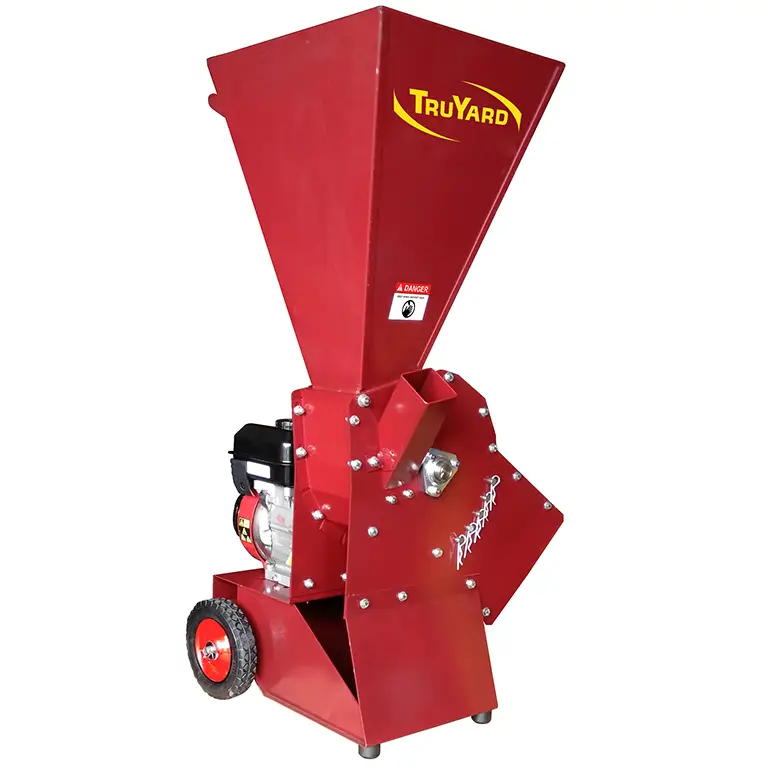


The main difference between a wood chipper and a chipper-mulcher is the type of material each machine is designed to process.
A wood chipper is the better choice when most of your material is woody branches and you want defined wood chips. A chipper-mulcher—also called a chipper shredder or shredder chipper—adds a hammer-based shredding system for leaves, hedge trimmings, fibrous plants and mixed garden waste, while retaining a separate chipper chute for branches.
Neither machine is automatically better. The right choice depends on what makes up most of your waste, the diameter of the branches, how wet or fibrous the material is and what you want to do with the processed output.
What is a wood chipper?
A wood chipper uses one or more sharpened blades on a rotating cutting mechanism—commonly a disc or drum—to cut branches into chips. The branch is fed through the inlet chute, the blade removes sections of wood, and the processed material exits through the discharge chute.
This makes a dedicated chipper well suited to:
– tree branches and woody pruning waste
– orchard or property clean-ups dominated by limbs rather than loose foliage
– producing wood chips for suitable garden beds, pathways or later composting
– users who do not need to process substantial quantities of leaves or mixed green waste
The key point is that a chipper is designed around woody material. Although leaves may pass through when attached to a branch, a blade-only chipper is not usually the most effective machine for feeding loose leaves, soft hedge trimmings or fibrous garden waste.
What is a chipper-mulcher or chipper shredder?
The terms chipper-mulcher, chipper shredder and shredder chipper are often used for the same type of combination machine.
A chipper-mulcher normally has two material paths:
1. A chipper chute directs branches to the chipper blade or blades.
2. A larger hopper feeds lighter garden waste into a chamber containing free-swinging hammers.
The hammers repeatedly tear and break down material before it leaves the discharge area. This allows a chipper-mulcher to process a broader mix of material than a blade-only wood chipper.
It is generally the more suitable option for:
– mixed piles containing both branches and foliage
– hedge trimmings, leaves and small prunings
– palm material and other fibrous garden waste, subject to the machine’s operating instructions
– acreage, garden and property clean-ups where the material changes from job to job
– producing shredded organic material for composting or use as garden mulch where appropriate
“Mulcher” does not mean the machine produces finished compost. It reduces the material into a form that may be more manageable and can be composted more readily, depending on the material and the way the compost pile is managed.
What about palm fronds or bamboo?
Palm waste is one of the clearest reasons to choose the machine according to material type rather than branch diameter alone.
Fresh palm fronds can be wet, stringy and fibrous. A chipper-mulcher’s hammer system is generally better suited to breaking down this type of material than relying only on a chipper blade. However, wet fibrous material can still restrict the discharge if it is fed too quickly or the machine is not configured and operated correctly.
Drier, more woody palm stems may process through a wood chipper, provided they fall within the model’s stated capacity and the operating manual identifies them as suitable material. If palms make up a large part of your workload, discuss the species, condition, stem diameter and volume with the dealer before selecting a machine.
The biggest trick to feeding difficult material like palms and bamboo through a mulcher is feeding the waste into appropriately sized pieces for the machine and at a pace that allows the machine to chip/mulch the difficult material without the engine bogging down due to fibrous material wrapping around the flywheel.
Chipper vs shredder: does the output differ?
Yes. A chipper cuts branches into recognisable wood chips. A shredder’s hammers produce a finer and less uniform material from foliage and lighter garden waste.
The better output depends on its intended use:
– Wood chips may suit pathways, surface cover and selected landscape applications.
– Shredded green material may suit composting or use as garden mulch, depending on what was processed.
Only process clean organic material approved in the machine’s operating manual. Do not chip painted or treated timber, manufactured board, metal, stones or other foreign material. Before using the output around edible plants, play areas or animals, make sure the original material is safe for that purpose.
Frequently asked questions (FAQs)
Is a chipper the same as a shredder?
No. A chipper cuts woody branches into chips. A shredder uses a different cutting or hammering action to break down lighter garden material. A chipper-mulcher combines both functions in one machine.
Is a chipper-mulcher the same as a chipper shredder?
In most garden-equipment searches, yes. Manufacturers may use “chipper-mulcher”, “chipper shredder” or “shredder chipper” for a combination machine that chips branches and shreds lighter organic material. Always check the actual processing system and approved materials rather than relying only on the product name.
Can a wood chipper process leaves?
Leaves attached to branches may pass through a chipper, but a dedicated blade-only wood chipper is not generally designed to efficiently process piles of loose leaves. A chipper-mulcher or shredder is usually the more appropriate choice for that job.
Can a chipper-mulcher process branches?
Yes. A chipper-mulcher has a dedicated chipper chute for branches. The maximum stated branch diameter varies by model, so check the relevant product specification and operating manual.
Which is better for composting?
A chipper-mulcher is generally more useful when the compost feedstock includes leaves, small prunings and mixed garden material. It reduces the size of that material, but the output still needs to go through the composting process.
Which is better for acreage or commercial property maintenance?
That depends on the waste stream and workload. A dedicated chipper may be the better tool for predominantly woody material. A chipper-mulcher may be more practical when the work regularly includes branches, foliage and fibrous waste. Machine size should then be selected according to volume, branch diameter, operating frequency, transport and available power source.