


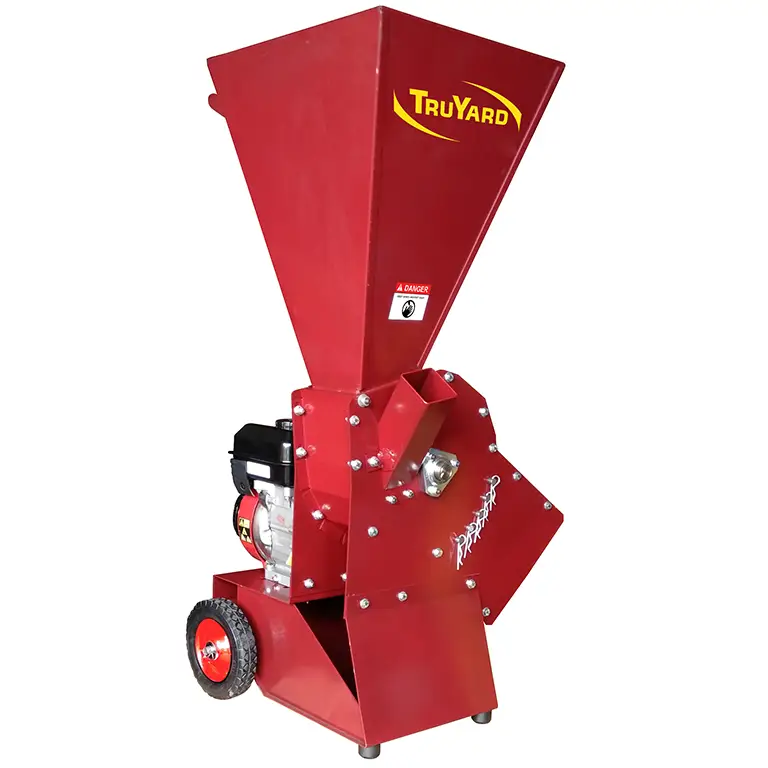


A chipper mulcher should be selected for the material you normally need to process—not simply by choosing the largest stated branch capacity. The key questions are how much of your waste is woody branches versus leafy or fibrous garden material, how often you expect to use the machine, and how you will move, transport and store it.
Unlike a dedicated wood chipper, a chipper mulcher combines a chipping mechanism for branches with a hammer-based mulching system for smaller or looser garden material. This makes the format worth considering when a property produces a mixture of woody prunings, leaves, shrubs and other suitable organic garden waste.
The following eight steps will help you choose the right machine without paying for capacity you do not need—or buying something too small for the work….
Decide whether a chipper mulcher suits your material
Start by looking at the waste you produce most often.
A chipper mulcher is generally the better choice when you regularly process a mixture of:
– Tree and shrub prunings
– Leaves and loose garden waste
– Small green branches
– Palm material
– Hay, manure or vegetable matter
– Cardboard and similar compostable material, where permitted by the machine manufacturer
The chipper chute processes larger branches using one or more cutting blades. The larger mulching hopper directs smaller and looser material through a series of swinging hammers, reducing it into material that can be composted, spread as mulch or disposed of more compactly.
If nearly all your material consists of woody branches and you do not need to process loose garden waste through a mulching hopper, a dedicated wood chipper may be the better fit. See our guide to wood chippers versus chipper-mulchers before deciding.
Match the machine to the property and workload
The right machine for an occasional suburban garden clean-up is not necessarily the right machine for an acreage property, orchard or regular property-maintenance workload.
| TYPICAL USE | WHAT TO PRIORITISE |
|---|---|
| Medium to large residential garden | Appropriate capacity, manageable weight, storage footprint and mixed-waste capability |
| Acreage or rural property | Capacity for the usual branch size, volume per session and movement over the property |
| Orchard or extensive garden | Frequency and volume of pruning waste, loading effort and practical throughput |
| Landscaping or paid work | Duty cycle, transport, service access, replacement parts and applicable commercial warranty |
Estimate how often you will use the machine, the amount processed in a normal session and the proportion of branches to loose garden material. Do not assume a machine that suits occasional clean-ups will also suit frequent, high-volume work without comparing its intended duty, feed system and servicing requirements.
Allow for material preparation as well. Forks and side branches may need to be trimmed so material can enter the correct chute without being forced. Follow the operating manual for acceptable material, preparation and feeding technique. A larger stated capacity does not remove the need to prepare and feed material safely.
Choose branch capacity based on normal material—not the largest branch
Maximum branch diameter is useful, but it should not be the only specification used to compare machines.
A stated capacity such as 65 mm or 90 mm is a maximum diameter—not a promise that every branch below that diameter will process at the same rate. In practice, feeding and processing can also be affected by:
- Timber species and hardness
- Whether the branch is fresh, dry or partly seasoned
- Knots, forks and side branches
- Branch straightness
- Blade condition and adjustment
- Engine speed and machine condition
- The rate at which material is fed
As a buying principle, select around the material you process regularly. If much of your material is near one model’s maximum stated diameter, compare the next model and request a demonstration with representative branches. This is a recommendation rather than a claim about guaranteed throughput.
Do not let one occasional oversized limb determine the whole purchase. Consider whether those few pieces can be handled separately instead of paying for, moving and storing a larger machine for every job.
Check how the machine handles leafy, wet and fibrous waste
This is where chipper mulchers differ most from dedicated wood chippers.
Loose leaves, hedge clippings and soft garden material do not feed through a branch chute in the same way as straight timber. A wide mulching hopper and swinging hammer system allow this mixed material to be processed separately from larger branches.
Fresh, wet or fibrous waste requires particular attention to the manufacturer’s instructions. Palm fronds are a relevant Australian example because their form, fibre and moisture differ from conventional woody branches. Results may vary with the type and condition of the material.
When this type of waste is a major part of your workload, confirm that it is approved for the machine and ask for a demonstration using representative material. Do not assume that a maximum branch-diameter specification also describes performance on wet, leafy or fibrous waste.
Wet and fibrous material can restrict discharge more readily than dry woody material. The Truyard operating instructions for the CM65, CM90 and CM95 allow the discharge bars to be removed when processing wet material, providing a less restricted exit path. Before changing the discharge arrangement or clearing the discharge area, shut the machine down and isolate its power source exactly as specified in the operating manual for that model. A PTO machine must be isolated from the tractor and PTO system; petrol-model instructions include disconnecting the spark-plug lead and waiting for the flywheel to stop completely.
Chipper mulcher FAQs
What is the difference between a wood chipper and a chipper mulcher?
A dedicated wood chipper is primarily designed to process branches through a chipping blade or cutting system. A chipper mulcher adds a separate hopper and hammer-based system for leaves, shrubs and other smaller garden material, making it more versatile for mixed waste.
What size chipper mulcher do I need?
Base the decision on the diameter of most branches, the amount of leafy material, the volume processed per session and how often the machine will be used. Choose some capacity above your normal workload rather than relying on the machine’s maximum rating for every job.
Can a chipper mulcher process palm fronds?
The Truyard operating information lists palm material among the intended inputs for the CM65, CM90 and CM95. Results can still vary with the type and condition of the fronds. If palms will be a major part of the workload, confirm the correct setup and arrange a demonstration with representative material before purchasing.
Can I put wet garden waste through a chipper mulcher?
Only process material permitted by the manufacturer. Wet material may require a different discharge arrangement or feeding approach. For the CM65, CM90 and CM95, follow the relevant operating instructions for wet material and discharge-bar configuration.
Does a larger engine always mean faster processing?
No. Engine size is only one part of the machine. The blade and hammer system, feed arrangement, discharge configuration, material condition, maintenance and correct operation also affect processing.
How often do chipper blades need sharpening?
There is no single interval that suits every owner. Blade life depends on operating hours, timber type and contamination. Inspect cutting performance and follow the maintenance schedule. Soil, stones, wire and other foreign objects can damage or blunt blades quickly.
What maintenance should I consider before buying?
Check the manual for inspection and service requirements, then confirm local availability and pricing for chipper blades, hammers, belts and other wear parts. Maintenance intervals and procedures are model-specific, so they should not be inferred from another brand or machine.
Need help choosing?
View the Truyard mulcher-chipper range, find your nearest Truyard dealer, or contact Truyard with details of your property, typical branch diameter and the material you need to process. We can help determine whether a chipper mulcher or dedicated wood chipper is the better fit. Happy clearing!